The Opening Title Sequence
The opening title sequence of a film, television series or other types of media are pivotal tools in which the directors must include the starring actors/actresses, the studio behind the media, the director, the producers and of course, the title. The purpose of a title sequence (aside from being compulsory by law), is to suggest to the audience what they should expect coming into a new film. In this blog, I have decided to include and analyse the title sequences of three types of media, one film, one television show and one video game. This is useful in determining what type of opening sequence I will be creating.

At the start of the sequence bond is seen in a long shot surrounded by water clearly in peril. No titles are present at the start.

Here the camera has zoomed in so that the audience can clearly establish facial characteristics. Bond seems unconscious and in danger.

Here, there is now a closeup on Bond's hand. Similarly to the previous shots, he is still surrounded by water, however in this shot, there is no detail or devotion to the rest of Bond's body.

The next shot is centred around the first titles which come up, "Albert R. Broccoli's Eon Productions LTD." It is also a closeup on Bond being dragged down into the depths of the sea. The shot is mostly blacked out with hints of light behind Bond like an eclipse.
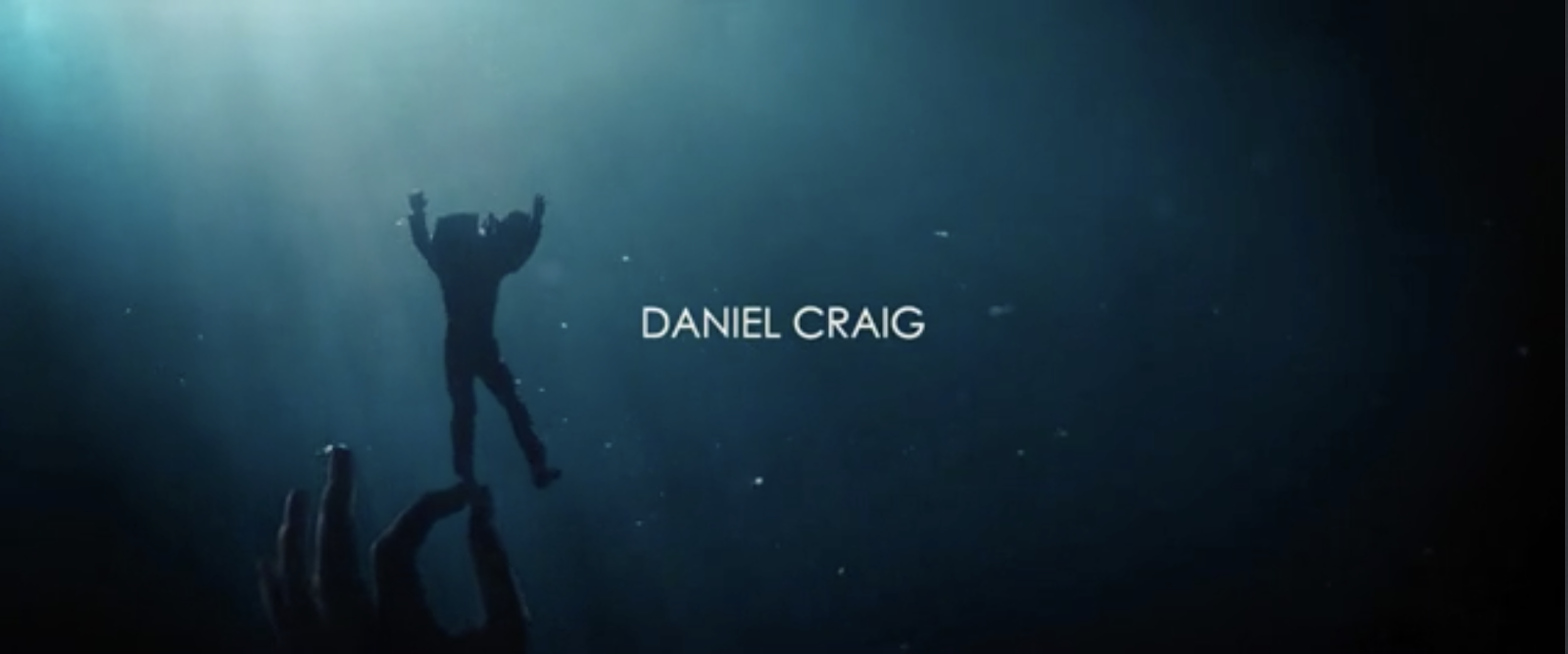
This shot is the first shot of which an actor's name appears (Daniel Craig), the font being a minimalistic, modern and subtle style. This long shot features Bond being dragged into deep waters by a hand. The view is mostly darkened but with light shining in from the top left corner.

This is a high angle shot, showing Bond sinking rather than being dragged down, as shown by the use of a high angle shot of his legs. The effect of the shot is to give the audience the idea that Bond is falling endlessly rather than sinking.

This is the shot showcasing the film's title. It is centrally placed as well as it is now bold, placing heavier emphasis on the main title. As for the shot itself, it is a long shot featuring Bond being pulled into some sort of sink hole. It seems as though Bond is falling just as the title says.

This shot is strange as it blends two types of shots together, a closeup and a long shot, both of Bond still floating through endless seas. Sinking objects can be seen in the distance as well as another actor's name who's font has returned to the minimalistic style used before.

The next shot is a long shot of Bond appearing as a target with a bullet hole/wound in it's shoulder, bleeding. Many of the same target Bonds float around. The effect of this shot is to demonstrate the danger Bond is in and the stakes that are on the line for him. Another actor's name appears.

The next shot is a closeup of a woman who is mostly blacked out. Most of the background is also blacked out. The reason for this is to establish a tone of ambiguity and mystery (Who is the woman? etc)

The camera pans downward, revealing that the woman is naked. Again, the background is mostly blacked out and another actor's name appears.

This next shot shows a gun (presumably Bond's) falling and hitting the bottom, a puff of sand coming out. Most of the shot is blueish black and still darkish.

The shot immediately after shows various daggers falling point first into the sand, along with the gun that has also fallen.

The daggers slowly turn into gravestones as the camera zooms in more. The background is still dark blue and black, still maintaining the dark, thriller, high stakes tone of the movie. Another name appears in the same font used previously. The name is placed in the centre to hint to the audience that that name plays an important character in the film's story (M)

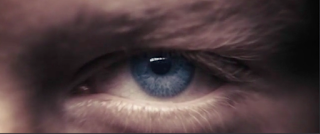
The next short is an extreme closeup of a character (presumably Bond) hiding behind some sort of wall. The camera zooms in further into his eye. The effect of this is to provide extra detail on the character's face/eye.


The next shots show Bond aiming his gun at his own shadows. He seems to be standing surrounded by various structures. The colours have have changed slightly in that there is more white.


The next shot is a zoom in some water with blood in it. As the camera zooms in, the audience will make out a skull made from the blood in the water. This symbolises the high stakes again just as some previous shots did. The combination of blood and a skull largely emphasises the stakes.

The next shot is a mid shot of a woman pointing a gun at the camera. The camera does zoom in until the camera is completely focused on the end of the gun. The colours have returned to it's dark tone.

The next shot changes the colour scheme of the sequence as it is now mostly black and orange as embers float around.

Next, numerous Chinese dragons begin to appear and fly around. The reason for this is to hint to the audience that perhaps the movie or parts of the movie, takes place in China. The colour scheme remains dark and orange in tone.

After the dragon shots, the next shot changes the colour scheme drastically as it is now black and white. Several shapes begin to appear, showing the shapes of different themes that an audience should expect in a 007 film (women, guns, etc).

The next shot is another skull, except it's black and white and the teeth are revealed to be gravestones as the camera zooms in. This imagery symbolises death over and over again (skulls, gravestones, colour scheme etc).


The next few shots revolve around Bond aiming his gun and surrounded by brick structures, similar to the one mentioned before. One of these shots shows a mid shot of Bond with a focus on the gun and the bullet wound in his chest.

This next shot zooms into Bond's chest wound, once again, there is more use of gravestones, again symbolising death. The colour scheme is bright red, shouting "death and suspense" into the audience's ear.

The final shot is of Bond behind a wall again. An extreme closeup showing the detail on Bond's face as the camera zooms into his eye.

This next shot shows a gun (presumably Bond's) falling and hitting the bottom, a puff of sand coming out. Most of the shot is blueish black and still darkish.

The shot immediately after shows various daggers falling point first into the sand, along with the gun that has also fallen.

The daggers slowly turn into gravestones as the camera zooms in more. The background is still dark blue and black, still maintaining the dark, thriller, high stakes tone of the movie. Another name appears in the same font used previously. The name is placed in the centre to hint to the audience that that name plays an important character in the film's story (M)


The next short is an extreme closeup of a character (presumably Bond) hiding behind some sort of wall. The camera zooms in further into his eye. The effect of this is to provide extra detail on the character's face/eye.


The next shots show Bond aiming his gun at his own shadows. He seems to be standing surrounded by various structures. The colours have have changed slightly in that there is more white.


The next shot is a zoom in some water with blood in it. As the camera zooms in, the audience will make out a skull made from the blood in the water. This symbolises the high stakes again just as some previous shots did. The combination of blood and a skull largely emphasises the stakes.

The next shot is a mid shot of a woman pointing a gun at the camera. The camera does zoom in until the camera is completely focused on the end of the gun. The colours have returned to it's dark tone.

The next shot changes the colour scheme of the sequence as it is now mostly black and orange as embers float around.

Next, numerous Chinese dragons begin to appear and fly around. The reason for this is to hint to the audience that perhaps the movie or parts of the movie, takes place in China. The colour scheme remains dark and orange in tone.

After the dragon shots, the next shot changes the colour scheme drastically as it is now black and white. Several shapes begin to appear, showing the shapes of different themes that an audience should expect in a 007 film (women, guns, etc).

The next shot is another skull, except it's black and white and the teeth are revealed to be gravestones as the camera zooms in. This imagery symbolises death over and over again (skulls, gravestones, colour scheme etc).


The next few shots revolve around Bond aiming his gun and surrounded by brick structures, similar to the one mentioned before. One of these shots shows a mid shot of Bond with a focus on the gun and the bullet wound in his chest.


The final shot is of Bond behind a wall again. An extreme closeup showing the detail on Bond's face as the camera zooms into his eye.
An interesting aspect of title sequences is that the title sequence in a work of media are all rather similar in that they all include the same conventions such as, starring actors, producers, studio names, music or various animations. The title sequences of other media such as television programs and even modern video games are beginning to adapt in way that is just like a movie. The examples below are title sequences from The Walking Dead (A popular TV show in the US) and Uncharted 4: A Thief's End (A critically acclaimed video game released in 2016)
One of the most important things a title sequence should do (as mentioned earlier) is that it is supposed to capture the genre and what the audience should expect from the media that they're about to experience. Viewers should see the title sequence and be able to identify bits of the plot, what kind of characters are involved and more.
One of the most important things a title sequence should do (as mentioned earlier) is that it is supposed to capture the genre and what the audience should expect from the media that they're about to experience. Viewers should see the title sequence and be able to identify bits of the plot, what kind of characters are involved and more.

The first shot of this sequence shows a dark room, a window with a wooden plank over it is present. The titles, "AMC presents" appears

The next shot is a closeup of a turning doorknob. The colour scheme mostly consists of black and dark shades of green, yellow and black.

The first actor's name appears in this shot. It is clear to viewers that the main character, Rick is played by Andrew Lincoln, as shown in the newspaper with his picture on it. The colour scheme remains similar throughout the entire sequence.

The next shot is a long shot of a dark empty room. Not much is visible here other than a door.

This is an empty supermarket, a shot that follows the shot of the dark room. This is an unnatural view of an everyday location, giving it a feeling of abandon, a common theme in the zombie sub-genre.


The next shot shows a mostly black closeup of a shattered photograph of another character/actress, played by Sarah Wayne Callies, as it clearly states. Something which the audience may have noticed (assuming that they have not seen the program) is that these actors are behind broken glass, indicating that there is some degree of danger these characters will face. This also applies to Rick, who's picture has blood on it.


The next four shots are quick shots which are all themed around abandon. The first two are long shots of abandoned places, a house and a camper van. The last two are more abstract, both are absent of any titles or actors.


The next two shots are themed around the streets of the city the program is set in. One name appears in each shot. The first shot of the streets show that it is empty, perhaps evacuated, while the second has zoomed out slightly, giving the audience a bigger picture of the situation.

As another name appears, The camera focusses on a hospital.

The next shot gives the audience a detailed look at the hospital's interior, a dark, empty hallway with papers scattered around it. There is only one light on in the entire hallway. This is another unnatural, twisted spin on an everyday location (like the supermarket)

The next shot shows a school. Most notably, there is an American flag next to it. This hints to the audience (again assuming that they have not seen the program), that the show takes place in the States or otherwise is an American show.


The next two shots show more abandoned streets and views of the city. The names of the executive producers appear.


These next two shots are more shots themed around abandon. The quick shot of the crows symbolise death.

This is the final shot before the main title appears. The most notable thing about it is that it is a zoomed out view of an abandoned motor way in front of a city. This reveals to the audience a much bigger idea of what is going to happen in the show, where it takes place etc.

The main titles come up at the end. The words "Walking Dead" are emphasised with bigger and bolder letters as well as a dirty, grungy looking font.
For the Walking Dead, the first thoughts that come mind is thriller. It can also be identified as being a dark, intense show based on the use of muddy colours combined with the various shots used, abandoned streets, dark corridors and "creepy" imagery such as a teddy bear lying on the floor and a dirty newspaper (the main protagonist on the front). These are several hints to viewers that this is a television series about a zombie apocalypse (assuming they haven't seen or heard of the show)
The next opening credit sequence is from Uncharted 4: A Thief's End, a video game that has borrowed from movies in terms of making an opening sequence. This is actually one of my main sources of inspiration as I will have mentioned in my post about my film's plot and various ideas. In terms of inspiration, the general idea for my title sequence will have a similar style of that of Uncharted 4, where the camera focuses on various objects sprawled all over a surface. Objects include maps, compasses, drawings, photographs of actors and locations. There will also be moments where shots of exotic locations flash on the screen for several seconds each.

At first, the screen is completely black, no titles are present. The only audible sound is light music.


The camera pans to another part of this journal/page, revealing the titles "A Naughty Dog Game". More ink spreads around the page.


The shot after the titles show the main protagonist (Nathan Drake) digging up what appears to be a box of some kind (It is actually a coffin). There is no view of his face. Players of the previous games will know that this exact thing happened at the prologue of the first Uncharted game. New players will presume that this would've been in an older game as the title clearly states that it is the fourth game in the series, as this title sequence is essentially a recap of the events played out in Uncharted 1, 2 and 3.

After the coffin shot, a crashing plane is present as several executive producer's names come up. There is clear danger involved in Drake's adventures.


The next shot is a shot summarising the previous images. The words, "El Dorado" appear at the bottom (Drake's first discovery) This shows the viewer/player that up to this point, the images shown were events and things associated with Drake's first adventure (The first Uncharted game). The actual shot consists of Drake leaping to a rope carrying a golden statue (the one on the right).

The next shot shows a long shot of another character standing next to a pile of treasure. His facial features are unclear as most of the shot (just like the others) is in the style of a drawing.


Next, there is a long shot of sort of village. Based on the familiar coloured banners, this village is located in Nepal or Tibet.


The next two shots are closely linked to each other, both use shades of yellow and brown, indicating a desert terrain. The first shot shows a cargo plane with vehicles hanging out of it, Drake can be seen hanging onto it. The second shot shows the plane has crashed in the middle of the desert. A structure can be seen to the left, labelled Ubar, Drake's third discovery.

Drake's face is finally revealed in this mid shot of him and Elena (his companion) smiling at one another. Clearly their stories have ended happily

The next shot shows characters riding horses in the desert. There is a ring buried in the sand. Based on how closeup the ring is, that means that it holds a significance.